


Highlights
- Apple is reportedly planning to eliminate all physical buttons in the iPhone 20.
- The company is planning to replace buttons with solid-state haptic controls that simulate tactile feedback through vibration.
- The new system may support pressure-sensitive interactions, AI-enhanced sound feedback, and dynamic button zones built into the metal frame and display edges for a seamless experience.
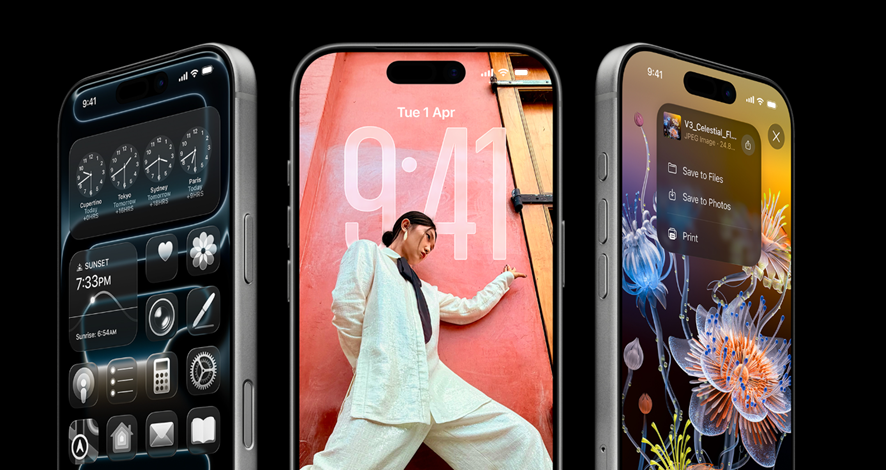
Apple’s upcoming iPhone 20 is expected to arrive in 2027 as part of the company’s 20th-anniversary lineup. While we have a whole other iPhone lineup to go through before that, new reports about this still-far-away iPhone are quite exciting.
According to a new leak from Chinese tipster Instant Digital, iPhone 20 in 2027 may completely abandon traditional mechanical buttons in favour of solid-state haptic alternatives. Here are all the details.
iPhone 20 With Button-Free Design?
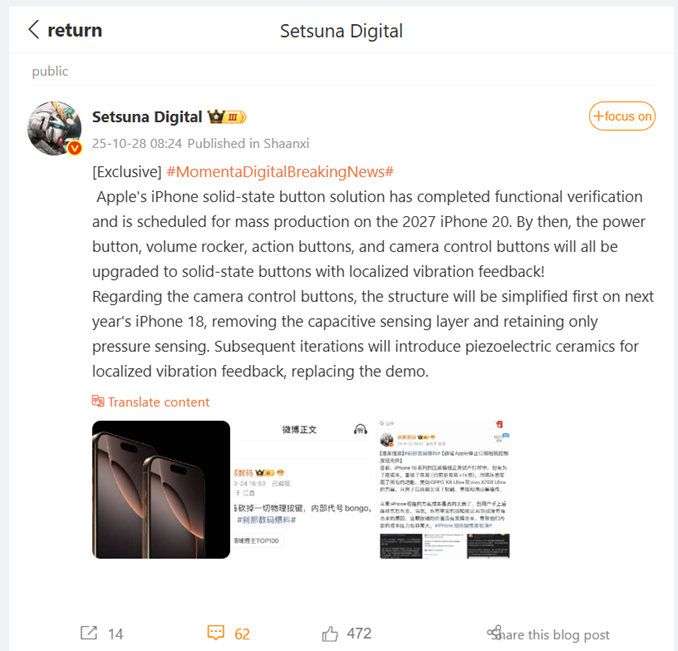
Caption – Tipster Instant Digital’s recent post on Weibo. (Translated via Google Translate)
The new post by this known tipster on Weibo suggests that Apple has already completed functional testing on a buttonless design that uses haptic feedback for all primary controls. This includes the Side button, volume keys, Action button, and Camera Control.
Instead of physically moving parts, these buttons will sit flush with the frame, relying on precise vibration feedback to simulate a real click.
This isn’t Apple’s first attempt at solid-state buttons. The company previously experimented with similar technology under the internal codename “Project Bongo”, initially planned for the iPhone 15 Pro in 2023 and later for the iPhone 16 Pro. Both times, the idea was shelved before release.
However, Instant Digital claims Apple has revived the project and is aiming to integrate the new haptic controls across its entire product lineup.
How the New Haptic Buttons Will Work?
According to multiple reports, the new button system is designed to reduce mechanical wear while offering a more versatile input experience. Users will reportedly be able to differentiate between light and firm presses, triggering different functions based on pressure sensitivity.
Apple’s engineers are said to be working on a system where buttons are built directly into the metal frame, featuring no physical movement but delivering tactile feedback identical to traditional buttons. The company may also use a vibration-based sound system that produces click-like sounds via the device’s back panel or frame, enhanced by an AI-based sound compensation algorithm to improve realism.
The rumoured timeline aligns with earlier reports suggesting Apple plans to introduce a wraparound display for its 20th-anniversary iPhone. It is a nearly bezel-free, all-glass slab with no visible cutouts or interruptions. Physical buttons would disrupt this seamless design, making solid-state alternatives a natural fit.
According to the leak, the edges of the display could transform into dynamic button zones, which adjust based on pressure, context, or lighting, creating a fluid and futuristic interface experience.
Whether the company can fully perfect this buttonless haptic system remains to be seen. However, given Apple’s track record, it wouldn’t be the first time it redefined how users interact with their devices.
FAQs
Q1. What major design change is expected in the iPhone 20?
Answer. Apple is reportedly planning to eliminate all physical buttons in the iPhone 20, replacing them with solid-state haptic controls that simulate real clicks using vibration feedback.
Q2. How will the new haptic buttons work on the iPhone 20?
Answer. The haptic buttons will be flush with the metal frame and use pressure sensitivity to differentiate between light and firm presses, triggering different functions. They may also produce click-like sounds using a vibration-based system enhanced by AI sound compensation.
Q3. Why is Apple moving toward a buttonless design for the iPhone 20?
Answer. The buttonless design aligns with Apple’s vision for a seamless, wraparound, bezel-free display for its 20th-anniversary iPhone, eliminating mechanical interruptions and enhancing durability and user experience.